Executive Summary
Store manager buy-in for better demo placement is not earned through enthusiasm alone—it is earned through operational credibility, measurable sales impact, and execution consistency. In today’s high-velocity retail environment, store leaders prioritize programs that protect labor, reduce friction, and demonstrably drive incremental revenue. This article outlines a data-driven framework beverage brands can use to consistently secure higher-traffic sampling locations and better in-store visibility.
Why Store Manager Buy-In Is Now a Strategic Advantage
Store managers sit at the intersection of execution, labor planning, compliance, and customer experience. While headquarters may approve a program, in-store leadership ultimately determines where—and whether—your activation succeeds.

For beverage brands competing for limited real estate:
- Endcap, lobby, or front-of-store sampling spots consistently outperform back-aisle placements
- High-traffic demo locations can lift conversion by an estimated 25–40% compared to low-visibility tables (industry estimate based on multi-retailer field benchmarks)
Securing those placements requires more than “we have a demo scheduled.” It requires store manager buy-in for better demo placement built on trust and proof.
What Store Managers Actually Optimize For
Operational simplicity, not brand ambition
From a store leader’s perspective, a demo program must:
- Avoid disrupting core traffic flow
- Require minimal associate support
- Stay compliant with safety and alcohol regulations
- Generate measurable value for the category
The strongest activations feel like operational assets—not marketing events.
The Four Drivers of Store Manager Buy-In for Better Demo Placement
1. Demonstrated Incremental Sales Impact
Managers respond to incrementality, not impressions.
What works:
- Referencing prior store-level or banner-level lift
- Showing velocity improvement for the activated SKU
- Connecting demo performance to basket size
Light industry context:
- Beverage sampling programs that are well-placed and staffed drive an estimated 15–30% short-term unit lift on the featured SKU (industry estimate)
When your team can explain how the program grows total category performance—not just your brand—it reframes placement as a business decision.
2. Execution Reliability at the Store Level
Poor execution is the fastest way to lose future placement.
Managers notice:
- Late arrivals
- Incomplete setups
- Brand ambassadors asking for help repeatedly
- Missing or incorrect product
Reliable execution signals professionalism.
From a store perspective, high-performing partners consistently deliver:
- On-time arrival and teardown
- Self-contained staffing
- Correct product and materials
- Clear compliance handling
This is where technology-enabled activation platforms quietly create leverage by reducing failure points in scheduling, staffing, and reporting.
3. Operational Readiness Before the Event
High-visibility placement is easier to approve when the store manager does not have to solve problems in advance.
Your program should already account for:
- Inventory availability and backroom coordination
- Cold storage needs (if applicable)
- Space footprint and power requirements
- Compliance documentation
Programs that arrive operationally complete earn more flexibility on placement.
4. Respect for the Store’s Performance Metrics
Store leadership is measured on:
- Labor efficiency
- Customer experience
- Safety
- Sales performance
High-converting activations actively protect those metrics.
When requesting a premium demo location, position the activation as:
- Low labor impact
- Minimal floor congestion
- Category-supportive
- Aligned with peak shopping patterns
That alignment is central to store manager buy-in for better demo placement.
How Better Placement Changes Conversion Dynamics
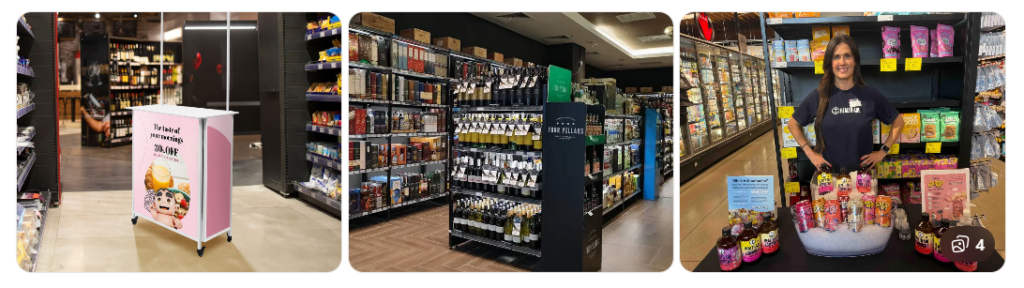
High-traffic placement changes the economics of sampling:
- More shopper exposure
- Shorter decision distance to shelf
- Higher impulse conversion
- Greater basket influence
Brands often underestimate how dramatically placement alone affects performance. In controlled field programs, simply moving from mid-aisle to front-zone placement can deliver an estimated 20–35% higher engagement rate (industry estimate)—without changing staff or offer.
A Practical Framework to Secure Better Demo Placement
Step 1: Lead With Store-Relevant Proof
Bring concise performance evidence:
- Prior lift at comparable stores
- Regional demo performance averages
- SKU velocity improvement during activation windows
Avoid brand-centric messaging. Use store language:
- units per hour
- category growth
- customer engagement volume
Step 2: Reduce Risk in the Manager’s Mind
Before asking for a premium location, proactively communicate:
- Setup time
- Table size
- Staff count
- Compliance handling
When a store manager clearly understands what will—and will not—be required of their team, placement approvals become easier.
Step 3: Treat Placement as a Partnership, Not a Request
Instead of asking:
“Can we be near the front?”
Reframe:
“We’ve seen higher category conversion when we’re positioned close to initial traffic flow. Would this entrance zone support that without disrupting peak movement?”
The difference signals operational awareness.
The Role of Data-First Activation Platforms

Retail leaders increasingly expect measurable accountability from field programs.
Technology-enabled sampling platforms now provide:
- Time-stamped arrival and completion data
- Photo-verified placement
- SKU-level reporting
- Store-level performance summaries
This infrastructure supports more productive conversations with store leadership—because placement outcomes can be documented and reviewed.
At Liquid to Lips, our approach as a technology-enabled activation partner and data-first sampling platform allows brands to consistently translate execution quality into placement credibility—across a national execution footprint.
Not through promises—but through repeatable, visible results.
Real-World Example (Generic Scenario)
A regional RTD cocktail brand launched a multi-weekend sampling program across a mid-size grocery banner.
Initial placements were mid-aisle.
After two weekends of performance reporting:
- Store-level conversion was shared with store managers
- Engagement counts were documented by time block
- Setup and teardown compliance was verified
For the following weekends, managers approved front-of-store placements at several locations.
Result (estimate):
- Engagement volume increased by approximately 32%
- Units sold during demo windows increased by approximately 24%
No staffing changes. No additional promotions. Only placement.
How Distributor and Supplier Teams Can Reinforce Buy-In
Distributor and supplier leaders play a critical role in reinforcing store manager confidence.
They can support:
- Pre-event alignment with store leadership
- Placement recommendations tied to category goals
- Post-event performance summaries
When retail, distribution, and brand execution teams present consistent data narratives, placement becomes easier to scale.
Actionable Takeaways for Beverage Leaders
- Prioritize store manager buy-in for better demo placement as a formal performance objective—not an afterthought.
- Equip field teams with store-level data, not brand stories.
- Standardize operational readiness to remove friction for store leadership.
- Use verified placement and execution data to build long-term credibility.
- Treat placement negotiations as collaborative category conversations.
Conclusion
Better demo placement is rarely won through persuasion alone. It is earned through execution discipline, operational empathy, and measurable commercial outcomes. Brands that invest in data-driven activation programs—and partners capable of delivering consistent national execution—create a foundation for sustained store manager buy-in for better demo placement. In a retail environment where every square foot must justify its value, credibility has become the most powerful placement strategy.