
Executive Summary
Beverage brands can leverage field marketing as a powerful data asset by capturing, analyzing, and acting on insights from demos, activations, and events. Through technology-enabled platforms, each interaction becomes actionable intelligence, allowing executives to make smarter decisions on allocation, messaging, and ROI. Furthermore, integrating field insights with CRM data provides a distinct competitive advantage. As a result, predictive analytics can forecast high-performing accounts and guide more strategic resource allocation.
Why Field Marketing as a Data Asset Matters
Traditionally, organizations have evaluated field marketing primarily through volume metrics—such as the number of demos, events, or samples distributed. However, these activities generate valuable consumer and account-level data that often remains underutilized.
For instance, key sources of actionable field marketing data include:
- Demo participation and conversion rates
- Account-level sales lift after sampling
- Consumer demographic and behavioral trends
- Distribution gaps and regional performance differences
According to industry estimates, brands that systematically capture field data experience a 10–25% improvement in targeting efficiency for future activations. Therefore, when approached strategically, field marketing evolves into a high-impact lever rather than a simple tactical expense.
H2: Capturing Field Data Effectively
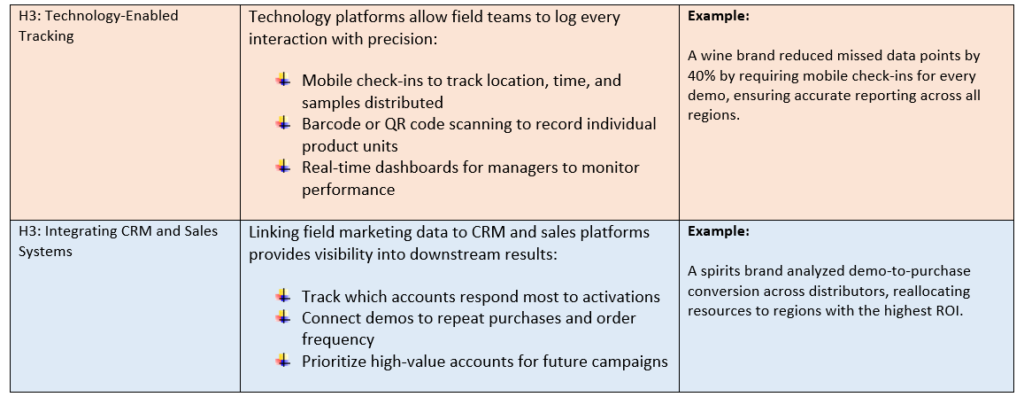
To begin with, brands must establish standardized processes for collecting data across all field activities. By leveraging digital tools, teams can ensure consistency, accuracy, and real-time reporting.
H2: Turning Insights Into Action
Once data is collected, the next step is to translate insights into meaningful action. For example, analyzing participation trends can help refine targeting strategies and improve campaign effectiveness.
H2: Operational Efficiency Through Data
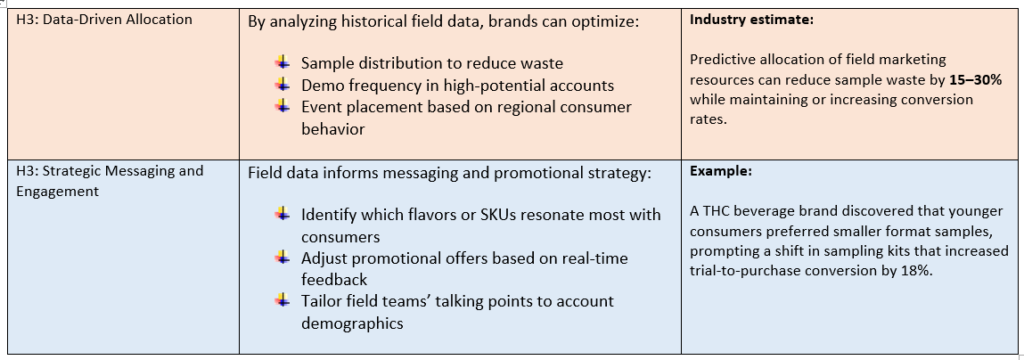
In addition, data-driven decision-making enhances operational efficiency by identifying what works and eliminating inefficiencies. Consequently, teams can allocate resources more effectively and maximize ROI.
H2: Positioning Field Marketing for Maximum Impact
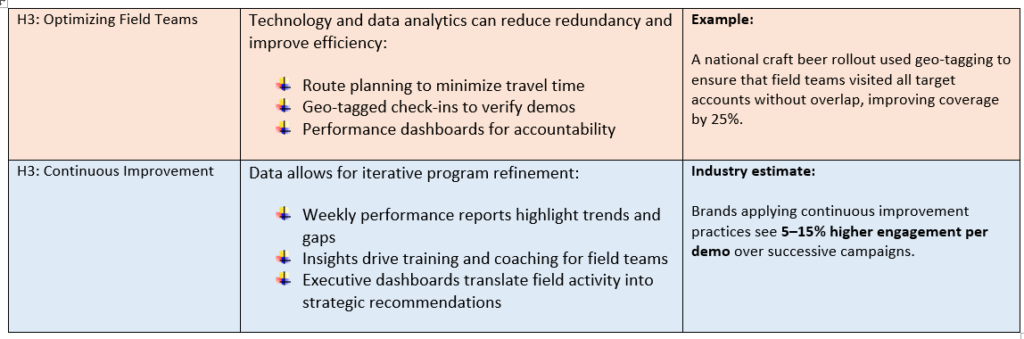
Ultimately, positioning field marketing as a data-driven function enables organizations to align field efforts with broader business objectives.
To fully leverage field marketing as a data asset, consider these strategic practices:
- First, partner with technology-enabled, data-first platforms to standardize data capture
- Next, align field insights with sales and marketing objectives at the national level
- Additionally, use analytics to generate actionable recommendations rather than simply reporting metrics
- Finally, treat every demo as a valuable source of insight that informs future campaigns
Actionable Takeaways
- Capture Data Consistently: Ensure all field interactions are logged in a digital platform
- Integrate With CRM: Connect demos and events to account performance and sales outcomes
- Analyze and Allocate: Use historical data to optimize sampling, demos, and team assignments
- Tailor Messaging: Adjust field strategies based on consumer preferences and regional trends
- Iterate Continuously: Continuously refine strategies by treating field data as a living resource
Conclusion
Field marketing is no longer just a promotional tool; instead, it serves as a strategic data asset. When properly captured and analyzed, it enables smarter decisions across distribution, sales, and marketing. Moreover, brands that adopt technology-enabled, data-first approaches can transform activations into measurable business outcomes. By partnering with a national execution platform like Liquid to Lips, beverage companies can scale field programs, minimize waste, and unlock insights that drive both immediate performance and long-term growth.