Executive summary
Sampling is one of the most powerful tools in beverage marketing—but its real value is rarely measured beyond the event day. Based on activation and sales tracking patterns seen across national beverage programs, the commercial impact of sampling typically extends well beyond the moment of trial. When properly measured, sampling drives measurable lift for 4 to 12 weeks—and in some categories, even longer—if the activation is supported by the right data, retail conditions, and follow-up strategy.
Why this question matters now?
For brand managers, supplier sales leaders, and distributor executives, the core question has shifted:
Not “does sampling work?”—but “how long does it work?”
As budgets tighten and distributor teams demand clearer ROI justification, brands need a realistic understanding of the sales window created by a sampling activation. This is especially true for:
- Emerging brands competing for limited shelf and display space
- THC beverages entering new regulated retail environments
- Craft spirits and premium wine fighting for repeat purchase, not just awareness
Sampling is no longer just an experiential tactic. It is a revenue acceleration tool—if the data is captured and connected correctly.
The typical sales impact window after sampling
Based on aggregated industry benchmarks and national activation program results (estimates based on multi-market beverage sampling programs):
Estimated post-sampling sales lift window

Estimated industry range:
Sampling can influence sales for 4 to 12 weeks after execution in most beverage categories (industry estimate).
The key takeaway:
Sampling does not end when the ambassador leaves the store.
What actually drives how long sampling impacts sales
1. Category and consumption frequency
Not all beverage categories behave the same.
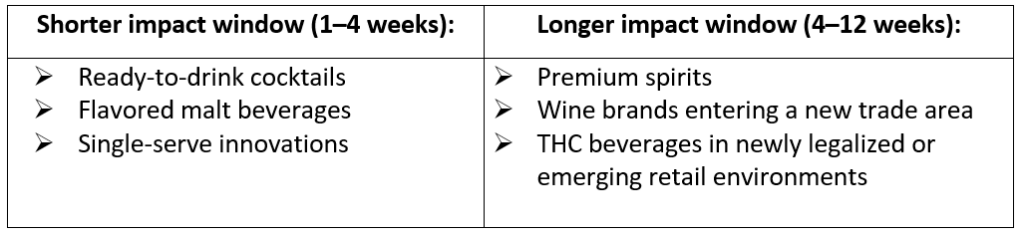
The more deliberate the purchase decision, the longer the sampling influence tends to persist.
2. Retail execution quality
Sampling only converts into lasting sales when the retail environment supports the shopper.
Key factors that extend the impact window:
- Secondary displays or endcaps
- Shelf tags or “as tasted today” signage
- Clean planogram placement
- Consistent inventory levels for at least 2–3 weeks after activation
If a sampled product is out of stock within the first week, the remaining 80% of potential impact is effectively lost.
3. Data capture and attribution
This is the single biggest reason brands underestimate how long sampling impacts sales.
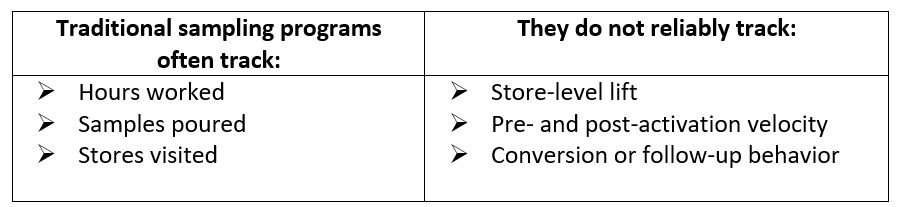
Without store-level or market-level sales integration, brands only “see” day-of performance—never the downstream impact.
This is where a technology-enabled, data-first sampling platform becomes essential.
At Liquid to Lips Marketing, national programs are structured around post-event data capture and market reporting, allowing brands to understand:
- Which stores sustained lift
- Which markets responded fastest
- Where future activations should be scaled
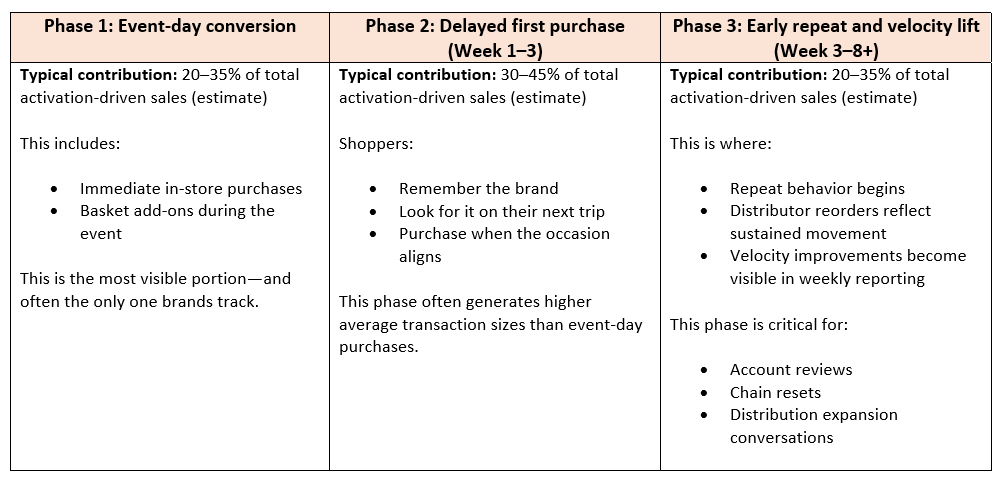
A realistic data breakdown of sampling impact
Below is a practical way to think about the revenue timeline.
Real-world example: regional spirits launch
A mid-sized craft spirits brand launched in three new metro markets using a 12-week sampling schedule across key off-premise retailers.
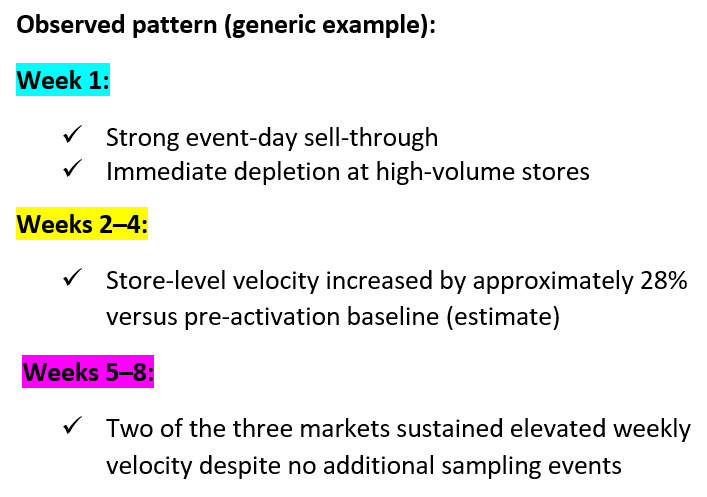
The brand’s internal takeaway was not that sampling “worked.”
It was that:
Sampling created a multi-week sales runway that aligned perfectly with distributor inventory cycles.
That insight reshaped their next market entry strategy.
Why many brands stop measuring too early?

Most brands evaluate sampling using:
- Daily sales
- Weekly recap decks
- Ambassador reports
The problem is timing.
Distributor depletion data typically lags by 7–14 days.
Retail scan data often lags even longer.
If you stop reporting at the end of the event week, you are effectively measuring only Phase 1 of the sales curve.
The hidden operational benefit: distributor alignment

Sampling that is supported by credible post-event data creates operational advantages:
- More productive chain review meetings
- Clearer justification for display programs
- Better prioritization of field sales resources
Distributor executives respond to:
- More productive chain review meetings
- Clearer justification for display programs
- Better prioritization of field sales resources
A national execution partner with integrated reporting helps bridge marketing and sales operations—rather than treating sampling as a standalone activation.
Special consideration: THC beverages
THC beverages follow a slightly different curve.
Based on early retail data patterns in regulated markets (industry estimate):
- Trial conversion is often high
- Repeat purchase depends heavily on:
- flavor satisfaction
- onset expectations
- education delivered during sampling
The sales impact window is often longer, but more sensitive to execution quality and compliance-driven constraints.
For THC brands, sampling becomes both:
- a trial engine, and
- an education platform
Which makes accurate data capture even more critical.
How to design sampling programs for longer sales impact
To extend the revenue window created by sampling:
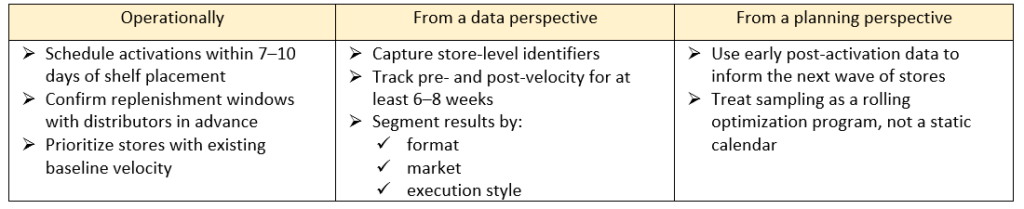
This is where a data-first activation partner provides real strategic value—connecting execution, reporting, and future planning.
Liquid to Lips Marketing operates nationally with technology-enabled field execution and centralized reporting, allowing brands to scale sampling while maintaining consistent data standards across markets.
Actionable takeaways for beverage leaders
- Sampling typically influences sales for 4 to 12 weeks—not just the event day.
- 30–70% of sampling-driven sales often occur after the activation ends.
- Retail readiness and inventory are more important than sample volume.
- Store-level data is essential to proving distributor and retail value.
- THC beverages require longer measurement windows and stronger education metrics.
Conclusion: sampling only becomes a growth strategy when data extends the story
Sampling remains one of the most effective tools in beverage marketing—but only when its true sales impact is measured beyond the floor.
The brands that win with sampling today are not simply executing more events. They are building activation programs that connect:
- national execution,
- disciplined data collection, and
- post-event sales analysis.
When sampling is treated as a data-driven growth channel—supported by a technology-enabled, national activation partner like Liquid to Lips Marketing—it evolves from a promotional expense into a repeatable, scalable revenue engine.
The real question is no longer whether sampling drives sales.
It is whether your organization is capturing—and acting on—the full length of its impact.