Executive summary
Winning prime demo locations in grocery stores is no longer about who asks first—it is about who can prove commercial value to the store and its partners. The most successful beverage brands secure premium placements by aligning demos to store traffic patterns, category strategy, and measurable sales impact. This article outlines a practical, data-informed framework to help brand managers, supplier leaders, and distributor teams consistently earn high-visibility demo locations that convert.
How to win prime demo locations in grocery stores is one of the most important questions facing beverage brand managers, supplier leaders, and distributor executives as in-store sampling becomes more competitive and more closely tied to measurable retail performance.
Why prime demo locations matter more than ever
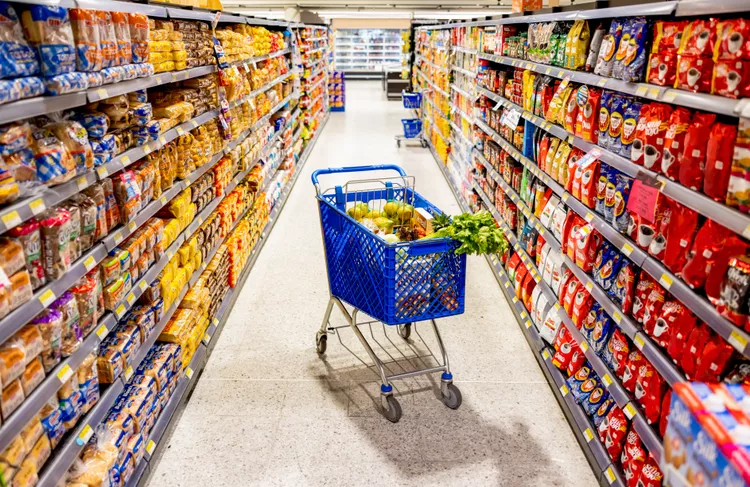
In high-volume grocery environments, demo placement determines whether a sampling activation becomes a true demand driver—or simply a compliance exercise.
Industry estimates (trade and field benchmarking):
- Shoppers are 2–3x more likely to engage with a demo positioned along a primary traffic corridor versus a low-visibility side aisle.
- Demos executed near an active purchase decision point can drive 15–30% higher same-day conversion compared with non-adjacent placements.
In other words, the location itself is often more influential than the brand script.
Winning better real estate requires brands to stop treating demos as a marketing request—and start presenting them as a category performance tool.
What qualifies as a “prime” demo location in grocery stores?
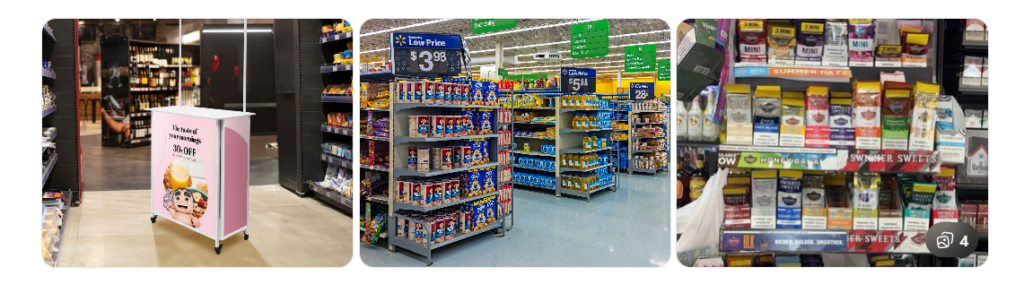
Prime demo locations consistently share three characteristics:
1. They sit on dominant traffic paths
These include:
- front-of-store action alleys,
- main cross-aisles,
- and entry corridors into high-velocity departments.
2. They support a real buying moment
High-performing demo placements are:
- adjacent to the product’s shelf set, or
- within one immediate decision zone (endcap, bunker, or secondary display).
3. They minimize friction for store operations
Retailers favor locations that:
- do not block carts or emergency pathways,
- allow associates to replenish nearby shelves,
- and comply with local safety and alcohol service rules.
Key insight:
“Visibility” alone does not make a location prime. Prime locations must support both shopper behavior and store operations.
Understand the store’s internal priorities before requesting placement
Most demo location decisions are influenced by store leadership and regional operations—not by brand preference.
To win consistently, your request must align with what store teams are measured on:
- weekly category sales
- shrink and inventory efficiency
- traffic flow and congestion
- labor impact
This applies whether you are activating in large national chains such as Kroger or regionally driven operators such as H-E-B.
What this means for beverage brands
Your demo request should be framed around:
- how the placement supports category growth,
- how it complements current merchandising,
- and how it reduces execution risk for the store team.
Build a placement pitch that retailers can approve
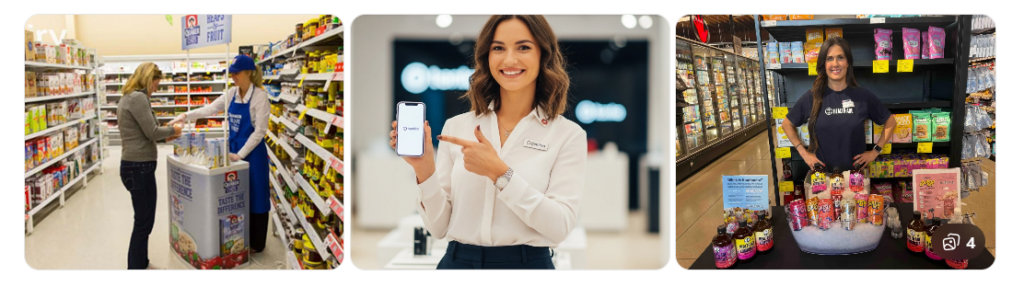
Prime locations are rarely assigned casually. They are approved when the brand demonstrates a low-risk, high-return execution plan.
Your demo placement pitch should include:
- Traffic logic
- Why this exact location aligns with shopper flow.
- Shelf logic
- Where the product sits and how the demo supports that set.
- Operational logic
- How the team will avoid congestion and disruption.
- Commercial logic
- What performance outcome the retailer should expect.
Real-world example (generic):
A ready-to-drink cocktail brand requested placement in a front cross-aisle rather than within the alcohol aisle. The request was supported by traffic mapping from prior activations and a defined shelf adjacency plan. Store leadership approved the placement because it drove trial among shoppers who would not otherwise enter the set.
Use performance data to justify premium real estate
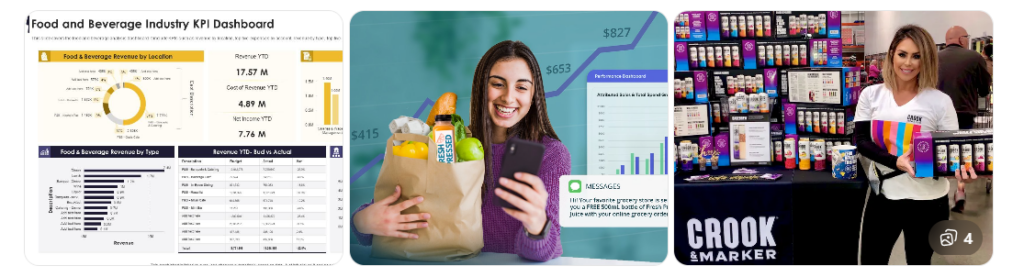
Retailers increasingly expect evidence that premium placements generate measurable outcomes.
High-value data points that strengthen placement requests:
- shopper engagement volume
- estimated conversion or intent indicators
- observed objections (price, flavor, package)
- shelf availability and display compliance
- associate feedback
Industry estimate:
Brands that use historical activation performance to request placement are 20–30% more likely to secure premium demo zones than brands making generic location requests.
Align demo locations with category and promotional calendars
Prime locations are often reserved for:
- major brand programs,
- seasonal category pushes,
- and retailer-funded initiatives.
Winning placement requires calendar awareness.
Best practice:
- align demo timing with:
- new item authorizations,
- display builds,
- seasonal resets,
- or circular promotions.
When your demo reinforces an existing retailer initiative, it becomes additive rather than competitive.
Distributor partnership is a placement accelerator
Store leadership places strong trust in distributor field teams.
Brands that consistently win better demo locations:
- share activation calendars with distributor sales leadership,
- coordinate placement requests with account managers,
- and circulate post-activation insights.
Why this matters
Distributor teams help validate that:
- the product is in stock,
- displays are set correctly,
- and store leadership understands the broader sales plan.
This commercial alignment increases confidence that a premium placement will actually convert.
Train sampling teams to operate like retail partners
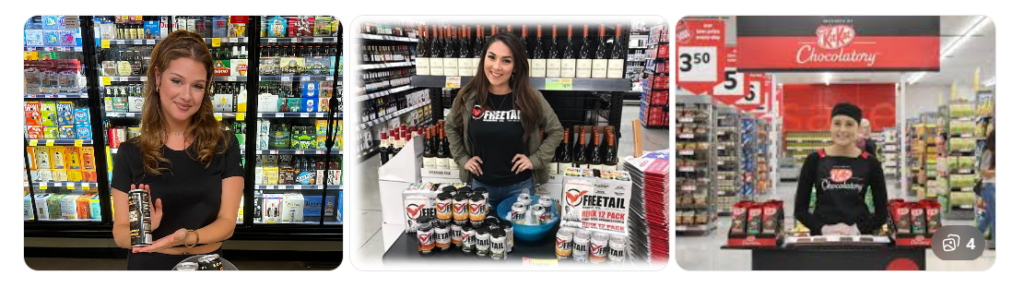
Even the best location can be lost if teams fail to operate within retail expectations.
High-performing demo teams demonstrate:
- traffic-aware engagement behavior
- clear aisle and pathway management
- fast setup and teardown
- collaborative communication with store associates
- strict compliance execution
Retailers remember operational performance—and it directly influences future placement approvals.
Technology-enabled execution is now a competitive advantage
Winning prime demo locations increasingly depends on how confidently a brand can manage:
- compliance documentation,
- field execution visibility,
- and post-event reporting.
As a technology-enabled activation partner and data-first sampling platform, Liquid to Lips Marketing supports beverage brands with:
- real-time shift verification and reporting,
- standardized training and compliance workflows,
- centralized market-level performance dashboards,
- and national field execution management.
The advantage is not simply scale—it is operational reliability and decision-grade data that can be shared with retailer and distributor partners.
Actionable takeaways for beverage leaders
To consistently win prime demo locations in grocery stores:
- Design placement requests around traffic flow and shelf logic.
- Present demo activations as category growth tools—not brand exposure.
- Use historical performance data to support placement decisions.
- Coordinate demo calendars with distributor sales teams.
- Align demos with retailer merchandising and promotional initiatives.
- Invest in field teams trained specifically for retail environments.
- Deploy technology that enables real-time visibility and compliance reporting.
Conclusion: placement is a strategic lever, not a logistical detail
Prime demo locations are earned—not assigned.
Brands that treat demo placement as a data-driven commercial strategy consistently outperform those who rely on availability or relationships alone. When supported by disciplined field execution, retailer-aligned planning, and technology-enabled reporting, in-store sampling becomes a powerful growth engine rather than a one-day event.
For beverage brands competing for attention in crowded grocery environments, winning better locations is one of the most controllable—and most underutilized—drivers of activation ROI.