Executive Summary
QR code activation data is redefining how beverage brands measure the effectiveness of sampling and experiential marketing. By capturing real-time engagement and consumer behavior, QR codes allow brands to move beyond estimates and into precise, data-driven decision-making. As competition increases, leveraging QR code activation data is becoming essential for improving conversion, optimizing activations, and driving brand velocity.
Why QR Codes Matter in Modern Activations
Beverage activations—whether in-store tastings, on-premise events, or large-scale festivals—have historically struggled with one core limitation: limited data capture.
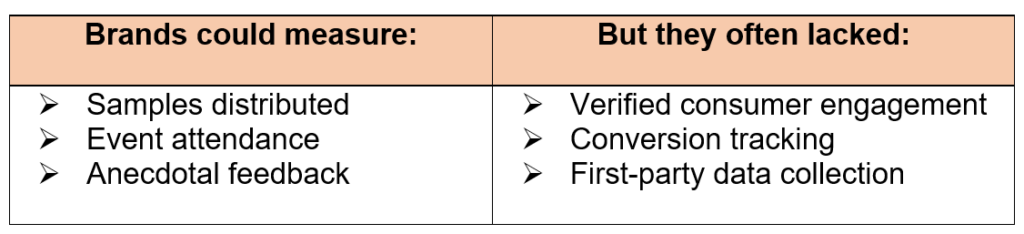
QR codes solve this gap by creating a direct, digital bridge between the physical activation and measurable consumer action.
Industry estimate:
- QR code engagement rates in experiential marketing environments range from 10–30%, depending on incentive and placement.
- Digitally enabled activations can improve data capture rates by 2–4x compared to traditional methods.
How QR Codes Work in Beverage Sampling
At a basic level, QR codes allow consumers to scan and interact with a digital experience during or immediately after a brand interaction.
Common QR Code Touchpoints
- Sampling tables in retail accounts
- Bar-top placements in on-premise venues
- Event booths and branded installations
- Product packaging or takeaway materials
Once scanned, consumers can be directed to:
- Product information pages
- Promotional offers or discounts
- Feedback forms or surveys
- Email/SMS opt-ins
- Store locators or purchase links
This transforms a one-time interaction into a trackable engagement funnel.
From Sampling to Data: What QR Codes Capture
QR-enabled activations provide a level of visibility that traditional sampling cannot.
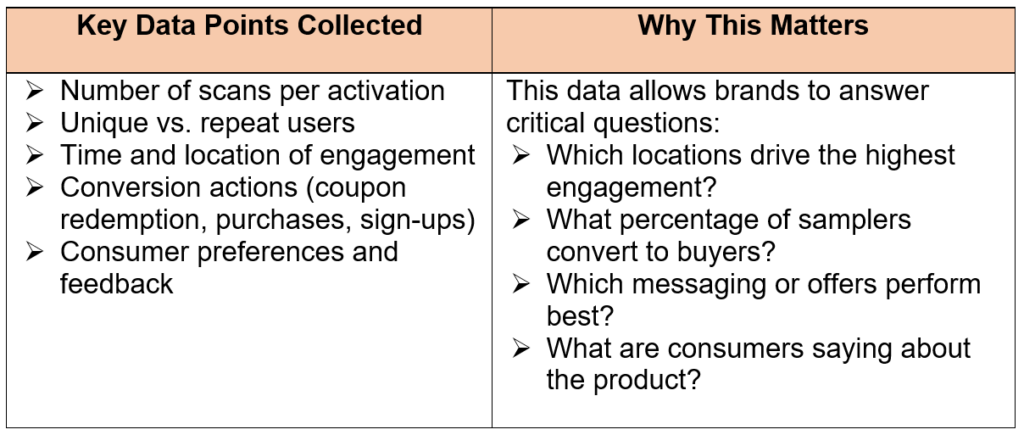
Instead of relying on assumptions, brands gain evidence-based insights.
Driving Conversion Through QR Code Strategy
QR codes are not just data tools—they are conversion drivers when used correctly.
Best Practices for Conversion
1. Offer Immediate Value
Consumers are more likely to scan when there is a clear benefit.
Examples:
- Instant discounts or rebates
- Sweepstakes entries
- Exclusive content or recipes
2. Keep the Experience Simple
A seamless mobile experience is critical.
- Minimal steps to complete action
- Mobile-optimized landing pages
- Fast load times
3. Align with the Moment of Trial
Timing matters. The highest conversion rates occur when the QR interaction happens:
- Immediately after tasting
- During peak engagement at events
- At the point of purchase decision
Example:
A premium canned cocktail brand offers a $2 digital rebate via QR code immediately after sampling in-store. Consumers who scan and redeem are significantly more likely to purchase on the spot, creating a direct link between trial and conversion.
Enhancing Consumer Insights and Personalization
Beyond conversion, QR codes unlock deeper consumer understanding.
Capturing First-Party Data
With increasing restrictions on third-party data, first-party data has become a strategic asset.
QR interactions can capture:
- Email addresses
- Purchase intent
- Flavor preferences
- Occasion-based insights
Enabling Personalization
This data can be used to:
- Segment audiences for future campaigns
- Tailor messaging based on preferences
- Retarget engaged consumers digitally
Example:
A hard seltzer brand uses QR-based surveys to identify top-performing flavors by region. This insight informs both distribution strategy and localized marketing campaigns.
Measuring Activation ROI with QR Codes
One of the most significant advantages of QR-enabled activations is improved measurement.
Key Metrics to Track
- Scan rate (scans vs. samples distributed)
- Engagement rate (completed actions)
- Conversion rate (purchases or redemptions)
- Cost per engagement
- Cost per conversion
Industry estimate:
Brands implementing QR tracking in sampling programs report 20–40% better visibility into ROI, enabling more informed budget allocation.
Integrating QR Codes into a Broader Activation Strategy
QR codes are most effective when integrated into a holistic, data-driven activation approach.
Key Integration Points
1. Alignment with Sales and Distribution
Ensure product availability matches activation efforts to capture demand generated.
2. Consistent Execution Across Markets
Standardize QR experiences while allowing for local customization.
3. Centralized Data Reporting
Aggregate data across activations to identify trends and optimize future programs.
4. Feedback Loop into Strategy
Use insights to refine targeting, messaging, and product positioning.
Common Pitfalls to Avoid
While QR codes are powerful, execution determines success.
1. Lack of Clear Incentive
Without a compelling reason, consumers will not scan.
2. Poor Placement or Visibility
QR codes must be easy to see and access during the activation.
3. Overly Complex User Experience
Too many steps lead to drop-off.
4. Disconnected Data Systems
If data is not centralized, insights are limited.
The Role of Technology and Execution Partners
Implementing QR-enabled activations at scale requires both technology and operational expertise.
Brands benefit from partners that can:
- Deploy QR codes seamlessly across multiple markets
- Ensure consistent field execution
- Capture and centralize data in real time
- Provide actionable reporting and insights
A technology-enabled activation partner with a data-first sampling platform can help brands move from isolated activations to coordinated, measurable programs. When combined with national execution capabilities, this approach ensures consistency while adapting to local market dynamics.
Actionable Takeaways for Beverage Leaders
To effectively use QR codes in activation strategy:
- Design for value: Give consumers a clear reason to scan
- Simplify the journey: Minimize friction in the user experience
- Capture meaningful data: Focus on insights that inform decisions
- Measure performance: Track engagement and conversion metrics
- Integrate systems: Ensure data flows into broader marketing and sales strategies
- Scale strategically: Start with pilot programs, then expand based on performance
Conclusion: Turning Activations into Data Engines
QR codes are transforming beverage activations from one-dimensional brand experiences into multi-layered, data-driven growth tools. By capturing real-time engagement and linking trial to measurable outcomes, they provide the visibility needed to optimize performance and justify investment.
For beverage brands operating in increasingly competitive markets, the advantage is clear: activations that generate data are activations that drive smarter decisions, stronger conversion, and sustained brand velocity.