
Executive Summary
Beverage brands often face inefficiencies in sampling programs, from overproducing samples to misallocating field resources. Technology-enabled solutions help brands track inventory, monitor demos in real time, and optimize sampling distribution. By leveraging data-driven insights, brands can reduce waste, improve ROI, and make smarter decisions about where and how to deploy activations. Partnering with a national, data-first execution platform ensures every demo contributes to both sales and strategic growth.
Why Sampling Waste Matters
Sampling is one of the most direct ways to drive consumer trial, yet it can be surprisingly wasteful. Common sources of waste include:
- Overproduction of samples that go unused
- Inefficient distribution across accounts and regions
- Demos targeting low-potential accounts
- Lack of real-time feedback to adjust programs
Industry estimate: Beverage brands lose 10–25% of samples to inefficiency on average, according to internal field data studies.
Reducing waste is more than a cost-savings exercise—it ensures that marketing investments drive meaningful engagement and measurable ROI.
How Technology Tackles Sampling Waste
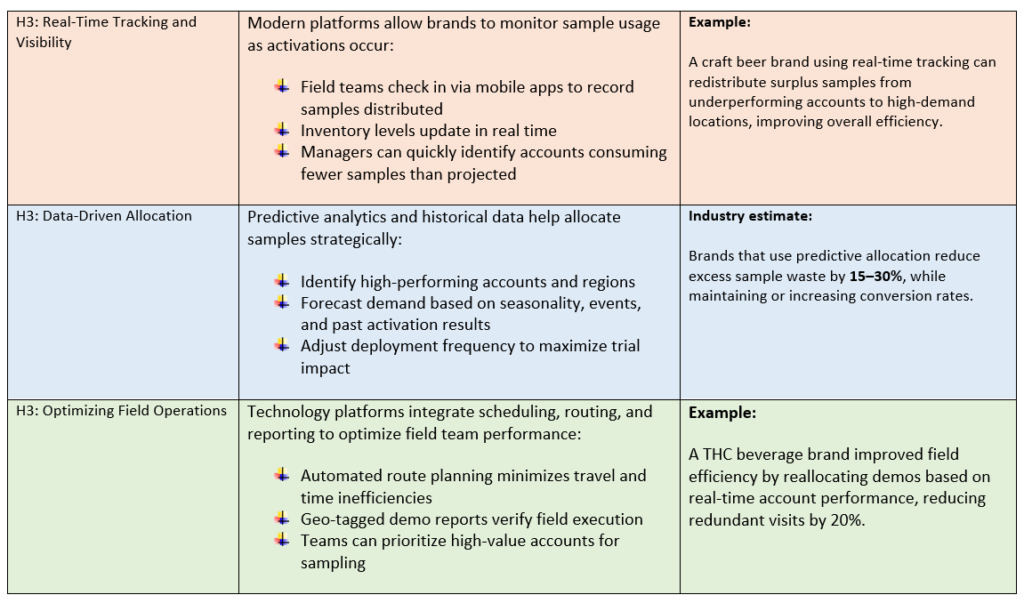
Integrating Technology With CRM and Sales Data
Linking sampling data with CRM or sales systems creates a holistic view of consumer engagement:
- Connect samples distributed to account purchase history
- Track demo-to-purchase conversion across regions
- Provide executives actionable insights to refine strategies
Example: Spirits brands using integrated platforms can identify which accounts have the highest repeat purchase after demos, enabling more targeted follow-ups and inventory management.
Benefits of a Technology-Enabled, Data-First Approach
- Reduced Sample Waste – Only distribute what is likely to be used and consumed.
- Improved ROI – Better targeting and accountability increase conversion from demos.
- National Scalability – Platforms support multiple accounts and regions simultaneously.
- Actionable Insights – Data informs both field tactics and executive-level strategy.
- Continuous Improvement – Real-time and historical data allow iterative program refinement.
Industry estimate: Brands leveraging a data-first platform see an average 20% improvement in demo-to-sale conversion compared to manual tracking methods.
Actionable Takeaways
- Implement real-time tracking to monitor sample distribution and inventory.
- Use historical data and predictive analytics to allocate samples efficiently.
- Optimize field operations with routing, geo-tagging, and automated reporting.
- Integrate CRM and sales data to connect demos to measurable outcomes.
- Continuously review performance to refine allocation and execution strategies.
Conclusion: Making Every Sample Count
Technology reduces sampling waste by connecting field activities with actionable insights. Beverage brands that embrace data-driven platforms can strategically allocate samples, optimize field operations, and link activations to sales outcomes. By partnering with a technology-enabled, data-first, national execution partner like Liquid to Lips, brands ensure every demo not only reaches consumers but delivers measurable business value, enhancing both short-term performance and long-term growth.