Executive Summary
Data-driven beverage sampling has become the most effective way for beverage brands to drive trial, improve in-store execution, and justify activation investment in 2026. As retailer expectations increase and distributor partners demand measurable results, sampling programs must now be built on real performance data—not assumptions. This article explains how data-driven beverage sampling improves conversion, strengthens distributor alignment, and helps suppliers scale activations with confidence.
The New Reality: Sampling Must Prove Its Value
For decades, sampling has been one of the most reliable ways to introduce new beverages and drive first purchase. That has not changed.
What has changed is the environment around it.
Brand managers, supplier sales leaders, and distributor executives are now being asked to justify:
- Where activations happen
- Which stores receive investment
- How many real buyers were influenced
- Whether sampling directly supports velocity and distribution goals
In 2026, sampling programs that cannot connect execution to commercial outcomes are increasingly difficult to defend during budget reviews.
This shift is driven by three structural pressures:
- Higher retailer expectations for professional, compliant, and measurable in-store activity
- Distributor focus on execution efficiency, not just brand presence
- Supplier demand for ROI visibility at the market and account level
Data-driven sampling is not a marketing trend. It is a response to how beverage organizations now operate.
From “Brand Awareness” to Commercial Activation
Traditional sampling programs were designed around reach:
- Number of stores
- Number of hours
- Number of samples poured
Those metrics still matter operationally. But they do not answer the question leadership teams now ask:
Did the activation change buying behavior?
Modern data-driven sampling programs are built to support:
- New SKU introductions
- Distribution expansion
- Chain resets
- Seasonal velocity lifts
- Account-specific growth strategies
Sampling is no longer an isolated marketing activity. It is an extension of sales execution.
What “Data-Driven Sampling” Actually Means in 2026

Data-driven sampling is not simply adding a post-event recap.
It is a connected system that supports planning, execution, and performance analysis.
1. Smarter Market and Store Selection
Instead of choosing stores based on anecdotal performance or historical habits, leading programs now evaluate:
- Store-level category performance
- Brand and SKU distribution
- Market growth trends
- Promotional calendars and resets
Estimated industry insight: According to aggregated retail performance studies published by NielsenIQ, store-level execution variance can account for 20–30% differences in short-term promotional performance across comparable markets (estimate).
When sampling is aligned with real sales and distribution data, brands avoid overspending in low-opportunity locations.
2. Real-Time Execution Visibility
In 2026, leadership teams expect near-real-time confirmation that activations actually occurred — and were executed correctly.
Modern platforms capture:
- On-site check-ins and timestamps
- Photo verification of displays and placement
- Brand ambassador compliance
- Inventory and setup validation
This allows supplier and distributor teams to:
- Monitor execution during the program
- Identify operational gaps early
- Protect retail relationships
Field execution without visibility is now viewed as a controllable risk.
3. Consistent, Structured Shopper Engagement Data
High-quality sampling data is not free-form feedback.
It is structured, consistent, and usable across markets.
Well-designed programs collect:
- Number of qualified shopper interactions
- Trial-to-purchase intent indicators
- Key objections or barriers to purchase
- Brand recall and product feedback
Estimated benchmark: Industry field activation audits suggest that structured data capture improves post-program insights by 40–60% versus open-ended ambassador reporting (estimate).
The value is not volume. It is comparability.
Why Data-Driven Programs Outperform Traditional Sampling
Improved Conversion Efficiency
Brands consistently find that data-guided location and timing selection increases the likelihood that sampling reaches category buyers — not just store traffic.
This leads to:
- Higher immediate add-to-basket behavior
- Stronger promotional lifts
- More productive brand ambassador hours
In practice, that means fewer activations may generate stronger results than large, unfocused schedules.
Better Distributor Alignment
Distributors increasingly evaluate supplier programs based on:
- Market relevance
- Execution quality
- Account-level contribution
Data-driven sampling allows suppliers to share:
- Verified execution reports
- Store-specific engagement results
- Market performance patterns
This supports joint planning discussions rather than subjective recaps.
Stronger Retailer Relationships
Retailers value partners who arrive prepared, execute professionally, and respect operational constraints.
When activation partners use technology to:
- Confirm placement compliance
- Track setup timing
- Standardize ambassador training and behavior
Retail teams experience fewer disruptions and better in-store outcomes.
This becomes especially important for chains managing multiple supplier activations each week.
Real-World Example: Launching a New RTD in a Competitive Market
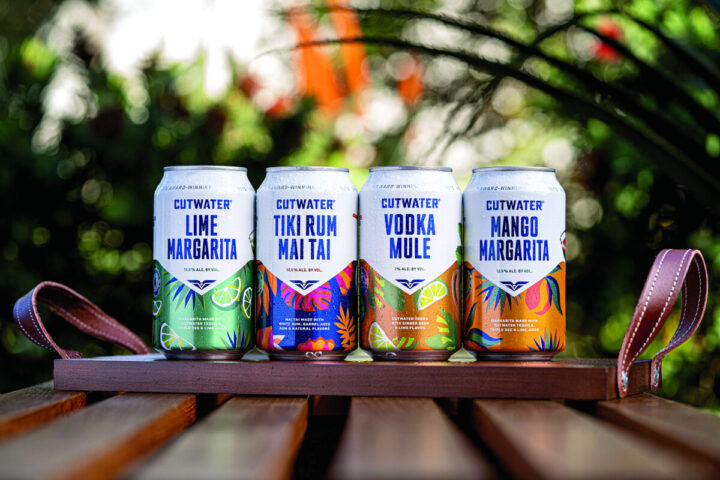
An emerging ready-to-drink spirits brand planned a multi-market sampling launch across two major distributors.
A traditional approach would have scheduled sampling across all available high-traffic stores.
Instead, the brand used a data-first strategy to:
- Prioritize stores with both category velocity and confirmed cold-box placement
- Align sampling days with distributor ride-along schedules
- Capture shopper purchase intent and brand awareness feedback
Post-program analysis showed:
- Higher engagement rates in targeted stores
- Faster reorder activity in priority accounts
- Clear insight into flavor preference by demographic segment
The brand refined its expansion plan before rolling into additional markets — reducing wasted spend during scale-up.
The Role of Technology-Enabled Activation Partners

As sampling programs become more complex, internal marketing and sales teams rarely have the resources to manage:
- National ambassador recruitment and training
- Real-time field monitoring
- Multi-market data standardization
- Performance reporting across programs
This is where a technology-enabled activation partner becomes strategically relevant.
Liquid to Lips Marketing operates as:
- A data-first sampling platform
- A technology-enabled activation partner
- A national execution network serving spirits, wine, beer, and emerging THC beverage brands
Rather than positioning sampling as a standalone event, the organization supports programs designed around:
- Measurable commercial objectives
- Distributor and retailer alignment
- Consistent execution standards
- Scalable reporting frameworks
The focus is operational performance — not promotional hype.
Industry Growth Pressures Are Accelerating the Shift
Estimated market context: Global beverage alcohol growth is increasingly driven by RTDs, premium spirits, and alternative formats. Market outlook reporting from IWSR Drinks Market Analysis indicates that new product launches and flavor extensions now account for a growing share of category value (estimate).
As SKU complexity increases:
- Shelf space becomes more competitive
- Trial must be more precise
- Activation budgets must be more defensible
Sampling programs that operate without performance intelligence struggle to keep pace.
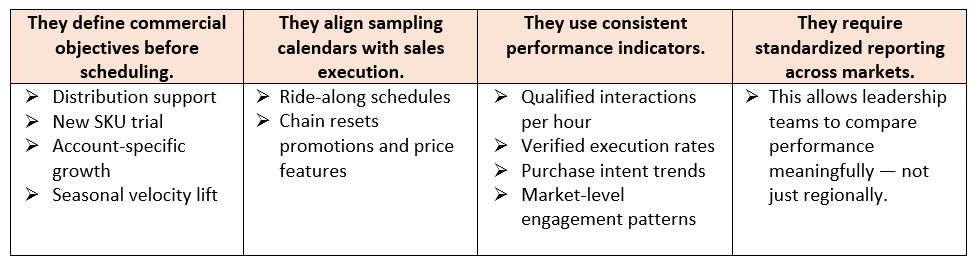
What Leading Beverage Teams Are Doing Differently
High-performing brands and suppliers are redesigning their sampling strategies around a few practical principles:
Actionable Takeaways for 2026 Planning
- Audit your current sampling programs for data completeness, not just volume.
- Evaluate whether your store selection is driven by real opportunity indicators.
- Align marketing activations with distributor execution priorities.
- Require execution partners to provide verified, standardized field data.
- Use post-program insights to refine market rollout plans — not simply to summarize activity.
Conclusion: Sampling Still Works — But Only When It Is Measurable
Sampling remains one of the most powerful tools for beverage trial and brand growth.
In 2026, however, its effectiveness is defined by how well it connects execution to commercial outcomes.
Data-driven sampling programs allow beverage organizations to:
- Invest with greater precision
- Strengthen distributor and retailer partnerships
- Scale new products more efficiently
- Defend activation budgets with credible performance insights
As a national, technology-enabled activation partner and data-first sampling platform, Liquid to Lips Marketing supports brands that treat field execution as a measurable growth engine — not just a promotional expense.
In a market where accountability now defines competitiveness, data-driven sampling is no longer optional. It is how winning beverage teams operate.