
Executive Summary
Soft launch vs national launch is a critical strategic decision for beverage brands entering competitive markets. Choosing the right approach impacts risk exposure, speed to market, and long-term sales performance. While a soft launch allows for controlled testing and optimization, a national launch prioritizes rapid scale and visibility. Understanding how to balance these strategies using data-driven activation is essential for sustainable growth.
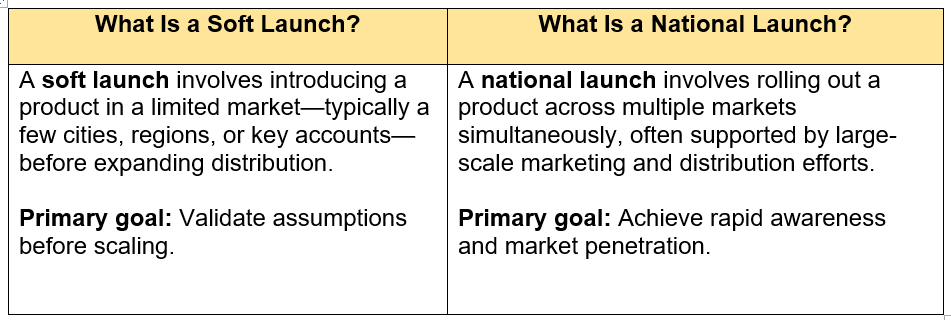
Understanding Soft Launch vs National Launch in Beverage
Soft Launch Strategy: Pros, Cons, and When It Works
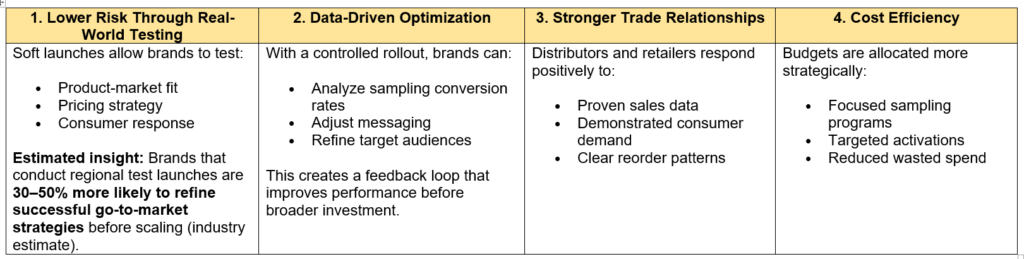
Advantages of a Soft Launch
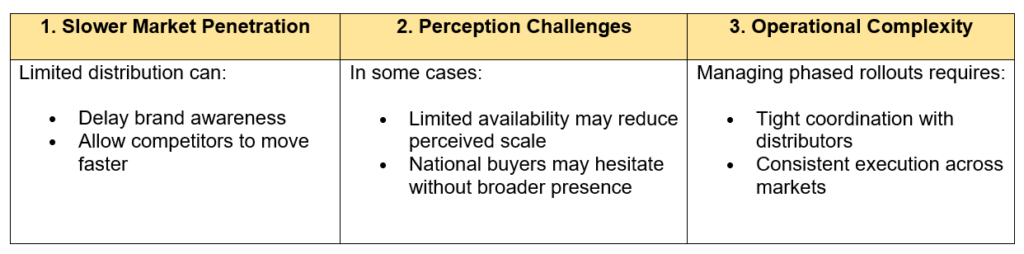
Disadvantages of a Soft Launch
When to Choose a Soft Launch
A soft launch is ideal when:
- The product is new or unproven
- Consumer behavior is uncertain (e.g., emerging THC beverages)
- The brand has limited marketing budget
- Data collection is a priority
Example:
A functional RTD beverage launches in two metropolitan markets, using targeted sampling and retail activations to validate pricing and messaging before expanding regionally.
National Launch Strategy: Pros, Cons, and When It Works
Advantages of a National Launch

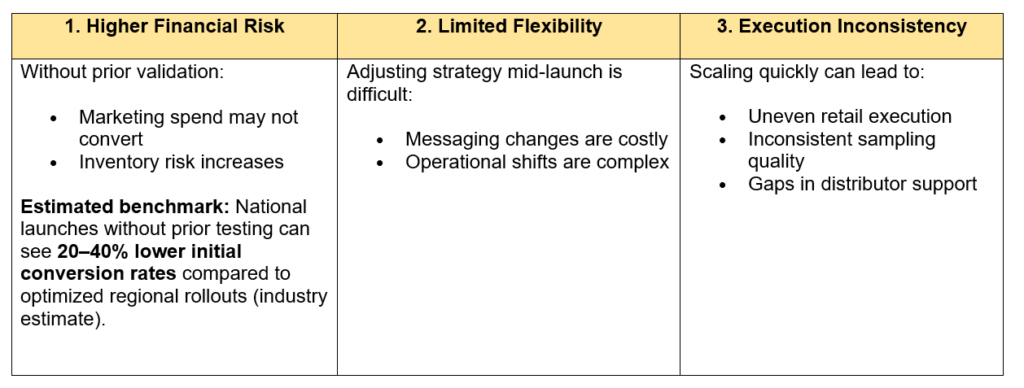
Disadvantages of a National Launch
When to Choose a National Launch
A national launch is best suited when:
- The brand already has strong equity
- The product fits an established category
- Distribution is fully secured
- Marketing resources are sufficient
Example:
An established spirits brand introduces a line extension nationwide, leveraging existing distributor relationships and brand recognition to drive immediate sales.
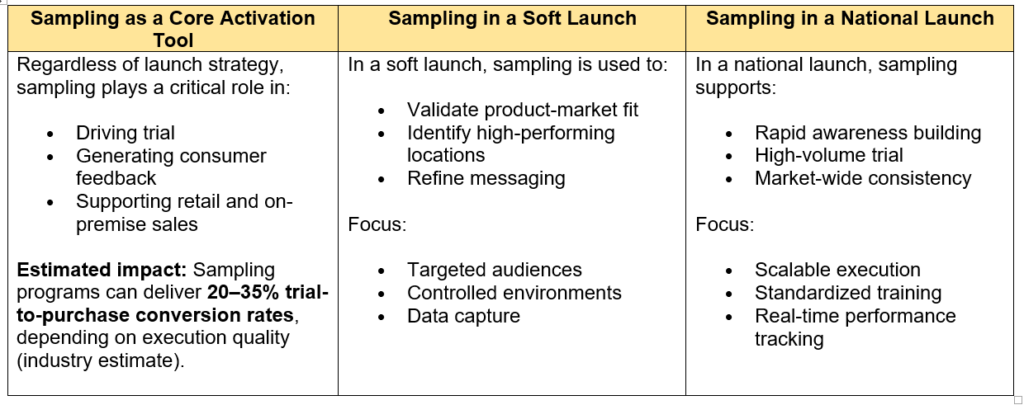
The Role of Sampling in Both Launch Strategies
Data as the Decision-Making Framework
Why Data Determines Success
The choice between soft launch vs national launch should not be based on intuition alone. It should be driven by:
- Consumer insights
- Market readiness
- Distribution strength
- Activation performance metrics
Key Metrics to Evaluate
- Trial-to-purchase conversion rate
- Sales velocity per account
- Cost per acquisition
- Repeat purchase indicators
Technology-Enabled Execution
Modern beverage brands benefit from:
- Real-time sampling data capture
- Geo-level performance tracking
- Centralized reporting dashboards
A technology-enabled activation partner can bridge the gap between field execution and strategic decision-making—ensuring that both soft and national launches are informed by measurable results.
Hybrid Approach: The Best of Both Models
Many leading brands adopt a phased strategy:
- Soft launch in key markets
- Optimize based on data
- Scale into a broader or national rollout
This approach combines:
- Risk mitigation
- Data-driven learning
- Scalable growth
Example:
A premium canned cocktail brand tests in three states, refines pricing and messaging, then expands nationally with proven activation strategies.
Common Mistakes to Avoid
- Choosing a national launch without validated demand
- Running a soft launch without structured data collection
- Misaligning distributor expectations
- Underinvesting in sampling and field execution
- Failing to adapt strategy based on performance data
Actionable Takeaways
- Align launch strategy with product maturity and market readiness
- Use soft launches to reduce risk and gather actionable insights
- Ensure national launches are supported by strong execution and infrastructure
- Treat sampling as a core driver of trial and data collection
- Leverage technology and real-time reporting to guide decisions
Conclusion: Strategy Should Follow Data, Not Assumptions
The decision between a soft launch and a national launch is not about choosing the “right” approach—it’s about choosing the right approach for your brand, product, and market conditions.
In today’s competitive beverage landscape, the brands that succeed are those that prioritize data-driven activations, structured testing, and disciplined execution. Whether starting with a targeted soft launch or scaling through a national rollout, success depends on the ability to measure, learn, and adapt.
A national, data-first activation partner like Liquid to Lips supports this process by connecting on-the-ground execution with real-time insights—helping brands move from uncertainty to confident, scalable growth.